
5 Ways to Preach Using Your Imagination

My grandfather wrote the book. It's called Preaching and Teaching with Imagination. While you may not have had a chance to read it, the title helps you know what it says already... "Stop boring people with the Bible!" Homiletics courses all over the country and for decades now have used this mantra for helping engage people with God's Word. But here's 5 ways I try to preach and teach with imagination...

  1. Manage the tension, reveal the problem, or don't even bother telling the story. All good stories have tension or dilemmas the character balances or solves. The biggest way to kill narrative preaching and kill your imagination is to refuse to build the crisis point.
  2. Read Between the Lines. The Bible is drama. It's often heart-breaking, hilarious, tense, and a matter of life-or-death. Just because the language is neat doesn't mean the drama isn't thick. Read between the lines by pulling out what's hinted at in the text.
  3. Imagine Modern Day Characters in the Story. I'm a big fan of watching a lot of Netflix. So are millions of people who you preach to. Tap into the common language of today by inserting a favorite character. For a few weeks there, characters from Frozen couldn't go wrong.
  4. Create Triggers for all 5 senses. In Narrative especially, there's huge opportunity for using language to move the listener's mind into the story, and sensory details make it happen.
  5. Use Your Life as the Starting Point. I doubt this is a good hermeneutic, but it makes for a great homiletic. Often I find myself transposing real life situations that I experience into the original situation. Often it helps "humanize" the Bible and shows that we all have experienced something similar to the narrative at hand.

Take a look at how I do these five things in this short clip from a recent message out of Luke 10:38-42.
Taking time to Celebrate

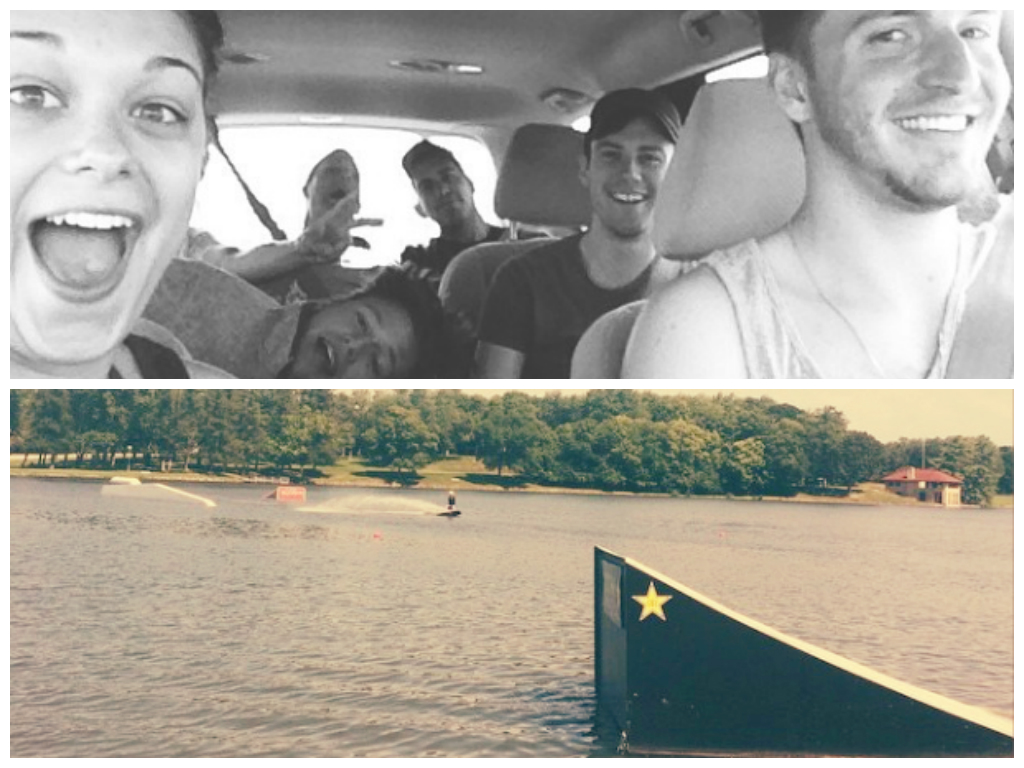
West Rock Wake Park For the past five years we've run a summer internship program at Harvest Naperville. We've been so blessed to find a handful of the brightest and most quality college students looking to explore church ministry. The really cool thing is, almost all of our interns have gone on from their summer with us to serve Jesus in the local church, some even our church.

So this year, to cap off a summer of sweat, tedious labor, early mornings and late nights, we took a little bit of time as a team celebrating these interns by a day of wake boarding at West Rock Wake Park. It was a ton of fun as we just kicked back today, but was a great time to hear what impacted them the most this summer. We'll miss these guys when the fall hits!

How I begin with the end

I recently found myself staring at a blank piece of paper and Psalm 101. This part of the sermon-writing process both excites and terrifies me. I honestly sit and stare and pray until I have a quick moment of epiphany where the text makes sense in my mind and I know how I'm going to end the thing. There have been times where I'm stuck in this phase one or two days, and there are times (thankfully) where I'm in this phase one or two minutes. Psalm 101 was one or two hours for me. This clip, which is the conclusion of my message on living with integrity, shows where I started in my preparation and how I wanted to set up the congregation to get at the real heart of the message.

Check it out:


5 Lessons I (re)learned leading summer camp

Highpoint 2014 Last week I took our high school ministry to summer camp. We've done a variety of versions of camp over the years, and this year we partnered with Expeditions Unlimited to do their house boating trip in Arkansas. It was some of the best ministry done in our group in a long time. Here's 5 things I learned, or learned again, while leading this year's camp.

  1. Students remember facing their fears, so let them face as much fear as possible. We stood at the edge of 18', 24', and 45' cliffs and jumped off into some crystal clear water. For many students, this was a blast. For some, it took every ounce of mental energy and faith to make the leap. But nobody will forget the moment they jumped. So nobody will forget camp.
  2. Program Relationally. This might be the best advice I could give to a first year youth pastor. I know I fell into the trap of "look at what we're doing and how awesome it is!" that my "program" lacked the substance of relationships and was so stressful. But this trip reminded me Gospel ministry thrives when relationships are cultivated.
  3. Cover your expenses. We had to charge the most we've ever charged for a summer camp. And we gave away thousands of dollars in aid for families in need. But the ministry budget took a minimal hit, and that's a huge part of showing responsibility. And I think everyone who went on the trip agreed they'd pay more...
  4. Students crave responsibility. Put them in charge! I talked with one of our Senior guys on the way home and asked him what he loved about the trip. Aside from the usual fun, he said he loved that he had to cook the meals, that students were in charge of docking the boat, and keeping things in ship-shape. I also left the last chapel session open for students to share what God is teaching them and to encourage our group. I tapped a few student leaders on the shoulder and they rose to the occasion!
  5. Keep bringing the day back to God. In prayer, in teachable moments, in your conversations, in worship, in devotions, keep the day coming back to God. On a lake in the middle of nowhere, it was easy. Show students God's goodness and his love. And watch as he blows you away!